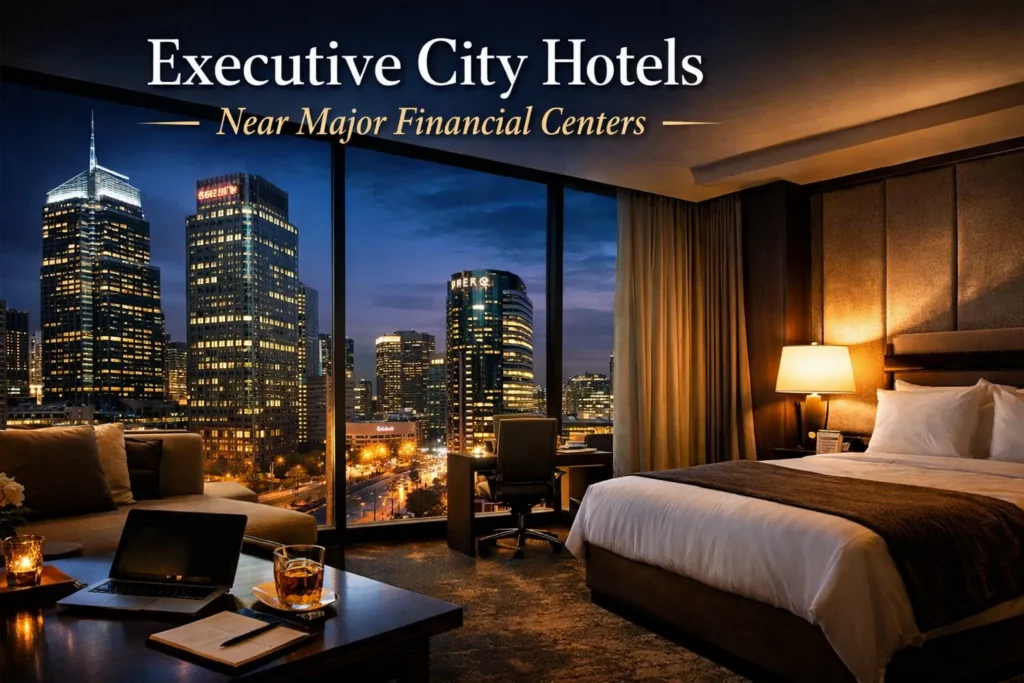
Executive City Hotels Near Major Financial Centers
When you think about luxury travel, your mind might jump to beachfront villas or mountain retreats. But let’s be honest—some of the most strategic stays in the world happen in the heart of a financial district. That is where executive city hotels near major financial centers step into the spotlight. These properties are not just places to sleep. They are polished command centers for decision-makers, global investors, corporate leaders, private clients, and international luxury travelers who value speed, privacy, and prestige.
In cities where every minute can influence a business outcome, the right hotel becomes part of the strategy. It is not only about thread count, skyline views, or marble bathrooms, although those certainly help. That also about stepping out of the lobby and arriving at a boardroom in minutes. It is about having a concierge who understands urgency, a private lounge that allows discreet conversations, and VIP services that make a demanding schedule feel effortless.
For premium travelers, the ideal property blends luxury lifestyle appeal with functional excellence. It should feel exclusive without being stiff, efficient without being cold, and elegant without trying too hard. That balance is rare, and when a hotel gets it right, it becomes far more than accommodation. It becomes an extension of the executive lifestyle.
Why Executive Hotels Matter in Global Finance Hubs (Executive City Hotels)
Major financial centers operate like the engines of the global economy. Deals move fast, capital flows constantly, and executives rarely have the luxury of wasted time. In that environment, hotel choice matters more than many travelers first realize.
An executive city hotel near a banking district, investment corridor, or corporate core offers something priceless: momentum. Instead of fighting traffic from a distant neighborhood, guests can move through the day with precision. Morning meetings, client lunches, investor presentations, and late-evening strategy sessions all become easier when the hotel is positioned at the center of the action.
There is also the matter of image. Like it or not, location sends a signal. Staying in a premium urban hotel close to major financial institutions reflects confidence, preparation, and professional polish. For international luxury travelers, that matters. A well-chosen property quietly communicates that the guest understands both business culture and premium hospitality standards.
The link between location, status, and convenience (Executive City Hotels)
In business travel, convenience is never just convenience. It is leverage. A five-minute walk to a financial tower can protect a schedule, reduce stress, and create more room for high-level focus. Think of it like owning a finely tuned watch. It does not only tell time. It shows that time matters.
Why affluent travelers choose premium city hotels
Affluent travelers are not simply paying for a room. They are investing in smoother transitions, private service, premium amenities, security, and reputation. The best executive hotels understand this. They do not sell space alone. They sell control, comfort, and credibility.
What Defines an Executive City Hotel (Executive City Hotels)
Not every upscale hotel qualifies as an executive hotel. Some properties are stylish, but not practical. Others are functional, but forgettable. A true executive city hotel bridges both worlds.
It offers premium accommodation designed around the needs of modern professionals. That means spacious rooms with ergonomic workstations, strong digital infrastructure, private meeting access, elevated dining, wellness options, and a service culture built around discretion. The tone is usually refined and professional, yet warm enough to feel personal.
The strongest properties also understand that business travelers have evolved. Today’s global executive often blends work, networking, wellness, and lifestyle into a single trip. A hotel that feels too corporate can feel lifeless. A hotel that feels too recreational can seem impractical. The ideal executive property lives comfortably in the middle.
Business-ready luxury without sacrificing comfort (Executive City Hotels)
Luxury matters, but only when it works. Plush bedding, blackout curtains, in-room espresso service, fast Wi-Fi, soundproofed walls, and efficient laundry turnaround are not extras in this category. They are essentials. Premium hospitality becomes meaningful when it supports performance, not just aesthetics.
The rise of exclusive urban hospitality
There is a growing demand for exclusive urban hospitality that caters to travelers who expect tailored experiences. This includes club access, curated city experiences, personal transportation arrangements, and private dining opportunities. In short, executive hotels are evolving from premium lodgings into urban lifestyle ecosystems.
Why Financial District Location Changes Everything (Executive City Hotels)
A hotel near a major financial center has a built-in advantage. It reduces friction. And in high-level travel, friction is the enemy.
Imagine arriving in a city for one night only. You land in the afternoon, meet legal advisors before dinner, host a breakfast the next day, then leave for another market. In that situation, every transfer matters. A premium hotel near the financial center allows the traveler to compress logistics and expand productivity.
Location also shapes access to the broader luxury ecosystem. Financial districts are often close to premium retail, fine dining, private members’ clubs, high-end transport services, and elite event spaces. For travelers who move between boardroom discussions and sophisticated social settings, this matters more than ever.
Faster access to meetings, banks, and corporate towers
Proximity to headquarters, investment firms, consulting offices, and banking institutions is more than convenient. It supports punctuality, lowers uncertainty, and keeps the day flowing with fewer interruptions.
A smarter base for international luxury travelers (Executive City Hotels)
For international guests, unfamiliar cities can feel overwhelming. Staying near a well-known financial center creates structure. It places them in a district that is usually secure, professionally serviced, and easy to navigate.
Core Features of Premium Executive Hotels
The best executive city hotels near major financial centers typically share a recognizable set of premium attributes. These details may seem small when listed individually, but together they create a frictionless luxury experience.
Spacious suites and elevated room design (Executive City Hotels)
Executive guests often need more than a bedroom. They need a private space to review documents, host quick conversations, or prepare calmly before a major engagement. Suites with separate lounge areas, floor-to-ceiling windows, elegant desk setups, and thoughtful lighting deliver exactly that.
Design also matters. Premium interiors influence mood. Rich textures, muted palettes, excellent acoustics, and uncluttered layouts can make a traveler feel grounded after a long-haul flight. It is the difference between merely occupying a room and truly settling into it.
Private lounges, meeting rooms, and concierge support
An executive lounge is one of the most valuable assets in a premium hotel. It offers a semi-private environment where guests can work, meet, relax, and recharge without stepping into a crowded public area. For many travelers, lounge access alone can justify a higher room category.
Meeting rooms, boardroom rentals, printing services, and skilled concierge teams add another layer of convenience. When a guest needs a car in ten minutes, a private dining room for six people, or floral arrangements for a client dinner, the hotel should handle it with calm precision.
Security, privacy, and seamless arrival experiences (Executive City Hotels)
High-profile guests often prioritize discretion over display. Secure elevators, private entrances, confidential billing, discreet staff communication, and efficient check-in processes all contribute to peace of mind. In luxury hospitality, privacy is not a bonus. It is part of the product.
Premium Facilities That Shape the Guest Experience
Great executive hotels do not stop at business essentials. They also create an environment that supports the full rhythm of an elite urban stay.
Executive lounges and club-floor privileges
Club-level privileges often include private breakfast, evening canapés, all-day refreshments, express services, and dedicated staff support. These benefits are especially attractive to premium travelers who want calm surroundings and elevated service without unnecessary formality.
Wellness spaces, spas, and fitness centers
Today’s executive traveler is more wellness-conscious than ever. A well-equipped fitness studio, recovery-focused spa, steam room, massage treatment menu, or even a short guided stretching session can make a major difference. After all, a sharp mind often depends on a well-managed body.
Fine dining, private dining, and chauffeur service
Luxury travelers expect more than a standard restaurant. They want curated menus, elegant service, strong wine programs, and the option of private dining when needed. Add chauffeur-driven transport, luxury vehicle access, or private transfer coordination, and the experience becomes even more seamless.
VIP Services That High-Value Guests Expect
VIP service is not about unnecessary ceremony. It is about anticipation. The strongest luxury hotels understand needs before guests need to explain them.
Personalized check-in and butler-level assistance
Some executive guests want to bypass the front desk entirely. Personalized in-room check-in, priority luggage handling, garment pressing, unpacking assistance, and butler-style support help create a smooth arrival. These touches feel small, yet they signal that the property values time and privacy.
Airport transfers and private mobility solutions
For international luxury travelers, transfer quality shapes the entire stay. A premium airport pickup with a polished driver, luxury sedan, bottled water, and direct routing can turn a stressful arrival into a composed beginning. In hospitality, first impressions travel far.
Discreet service for leaders, investors, and executives
Senior leaders and financial clients often need confidentiality. Hotels that understand this avoid loud gestures and instead focus on quiet efficiency. Staff should be visible when needed and invisible when not. That is true luxury. Not noise—control.
How Luxury Hotels Support Business Performance
It may sound unusual to say a hotel can improve performance, but the best ones absolutely can.
A poor hotel creates friction at every turn. The room is noisy. The Wi-Fi is unreliable. The breakfast is chaotic. The check-out line is long. The car is late. By the time the traveler reaches the first meeting, energy is already leaking away.
A strong executive hotel does the opposite. It protects energy. That gives the traveler better sleep, smoother routines, stronger focus, and more reliable service. It becomes the quiet operating system behind a successful trip.
Productivity-friendly environments
A proper work desk, supportive chair, accessible power outlets, high-speed internet, good lighting, and room-service efficiency all contribute to productivity. These are not glamorous details, but they are deeply valuable.
In-room technology and work-focused layouts
Smart room controls, screen-sharing capability, universal charging options, fast response times for service requests, and excellent connectivity all matter in premium business travel. A room should function like a private office after hours.
What International Luxury Travelers Really Look For
Luxury travelers crossing markets for finance, investment, consulting, private banking, or corporate leadership usually seek a specific combination: prestige, efficiency, exclusivity, and comfort. Miss one, and the experience feels incomplete.
They want a property that reflects their standards without wasting their time. That prefer intelligent design over flashy décor. They value polished service over scripted hospitality. And they appreciate a hotel that understands the difference between genuine exclusivity and staged luxury.
Prestige, comfort, and efficiency in one place
Think of the ideal executive hotel like a tailored suit. It should fit perfectly, move easily, and elevate presence without shouting for attention. The best stays feel that way—effortless, refined, and quietly powerful.
Experiences that feel curated rather than generic
International guests remember personalization. Maybe the concierge knows their dining preferences. Then the hotel arranges a private shopping appointment after a morning of meetings. Maybe the pillow setup, tea selection, or airport timing is already understood. That is where loyalty begins.
Real-World Examples of Executive Hotel Scenarios
Let’s bring this into a more practical context.
The investment banker on a short turnaround trip
A senior investment banker lands in a global finance capital at 4 p.m. They have a client dinner at 7, a presentation at 8 the next morning, and a return flight by afternoon. A luxury executive hotel near the financial district makes this workable. The fast check-in, pressing service, private transfer, quiet room, and lounge breakfast all help the guest move from arrival to performance without wasted motion.
The private equity team closing a regional deal (Executive City Hotels)
A private equity team uses a premium city hotel as an informal operations base during acquisition talks. They host quick internal meetings in a lounge, hold a private dinner in a reserved room, and rely on concierge coordination for transport and scheduling. In this case, the hotel becomes part office, part sanctuary, part image platform.
The luxury traveler combining business and leisure
An international traveler extends a business trip by two nights. After major meetings conclude, they shift into a more relaxed rhythm—spa treatment, fine dining, luxury shopping, a private city tour, and a club-floor cocktail service at sunset. The hotel succeeds because it supports both executive precision and lifestyle indulgence.
Choosing the Right Hotel for a High-Stakes Trip
When selecting executive city hotels near major financial centers, travelers should go beyond star ratings. Luxury can be marketed easily. Real quality shows up in consistency, service intelligence, and location practicality.
Evaluating location beyond the map
A hotel may look close to a financial center on paper, but the actual guest experience depends on traffic flow, pedestrian access, security, neighborhood atmosphere, and proximity to premium services. Smart travelers look at the whole ecosystem, not just the pin on a map.
Comparing service quality, privacy, and brand reputation
Service quality should feel intuitive, not mechanical. Read between the lines when evaluating a property. Does it attract corporate leaders and luxury travelers? Is it known for executive lounge excellence? Does it offer discreet VIP handling? Reputation in premium hospitality is built slowly and lost quickly.
Why Premium Hospitality Attracts High-Value Advertisers (Executive City Hotels)
From an SEO and publishing perspective, this niche is especially powerful because it intersects luxury travel, premium finance, executive services, private transportation, and high-intent accommodation search. These are categories that often attract strong advertiser demand and premium monetization potential.
Content centered on executive city hotels, corporate travel, luxury concierge services, private transfers, premium suites, and financial district accommodation naturally aligns with high-value audiences. These readers are not casual browsers. They are often planning expensive, time-sensitive, or professionally important trips. That kind of intent matters.
Luxury travel and finance as high-eCPM content categories (Executive City Hotels)
Luxury travel and finance-related topics tend to draw premium advertisers because the customer value is high. A traveler booking an executive suite, airport transfer, fine dining package, or VIP corporate stay represents far more commercial value than a generic travel click. That is why premium intent content often performs better in advertising ecosystems.
Why premium intent keywords matter for monetization
Keywords connected to executive travel, luxury hospitality, financial districts, premium services, wealth management travel, and corporate mobility often signal stronger buying intent. When integrated naturally into a high-quality article, they can support both reader relevance and stronger monetization positioning.
Mistakes to Avoid When Booking Executive City Hotels (Executive City Hotels)
Even experienced travelers sometimes miss the mark.
Choosing style over function (Executive City Hotels)
A visually striking hotel can still fail an executive traveler if the rooms are noisy, the dining is slow, the meeting options are weak, or the service lacks discretion. Beauty matters, but utility must lead.
Ignoring access, service depth, and exclusivity
Some hotels advertise luxury, yet deliver only surface-level polish. True executive comfort comes from layered service: fast response times, privacy, premium transport coordination, excellent dining, smart room design, and a staff culture that understands high-performance travel.
The Future of Executive Hotels in Financial Capitals
The category is becoming more personalized and more refined. Luxury hospitality is no longer satisfied with broad promises. Guests want specificity.
Personalization, smart rooms, and elite guest programs
Expect more hotels to lean into tailored experiences, predictive service, smarter in-room controls, wellness programming, private access features, and loyalty structures designed for global executives and affluent travelers.
Hybrid business-leisure travel and exclusive experiences
The line between business and lifestyle travel will continue to blur. Guests want properties that can support a board meeting in the morning and a curated luxury experience by evening. Executive hotels that master both will stand out.
What Makes a Stay Truly Memorable (Executive City Hotels)
At the highest level, memorable hospitality is rarely about one dramatic gesture. It is about a hundred small things done exceptionally well.
A driver who arrives early. A room that is perfectly quiet. A lounge team that remembers preferences. A concierge who solves problems without fuss. A suite that feels composed, not crowded. A dining experience that feels private, polished, and smooth. These details create trust. And trust is what turns a premium hotel into a preferred address.
Small details that create executive comfort (Executive City Hotels)
Luxury often lives in subtlety. The right lighting, the speed of service, the calm tone of the staff, the quality of linens, the silence of the room, and the precision of billing all shape the guest’s impression.
The emotional side of premium hospitality
Even corporate travel has an emotional layer. Travelers want to feel supported, respected, and understood. A great executive hotel offers exactly that. It helps people feel composed in a city that never stops moving.
Conclusion (Executive City Hotels)
Executive city hotels near major financial centers are more than premium places to stay. They are strategic assets for international luxury travelers who need convenience, privacy, prestige, and performance in one seamless package. The right property can sharpen a demanding schedule, elevate the guest experience, and create the kind of effortless confidence that matters in both business and lifestyle travel. In the world of luxury hospitality, the best executive hotels are not just close to the financial center—they become part of the reason the trip succeeds.