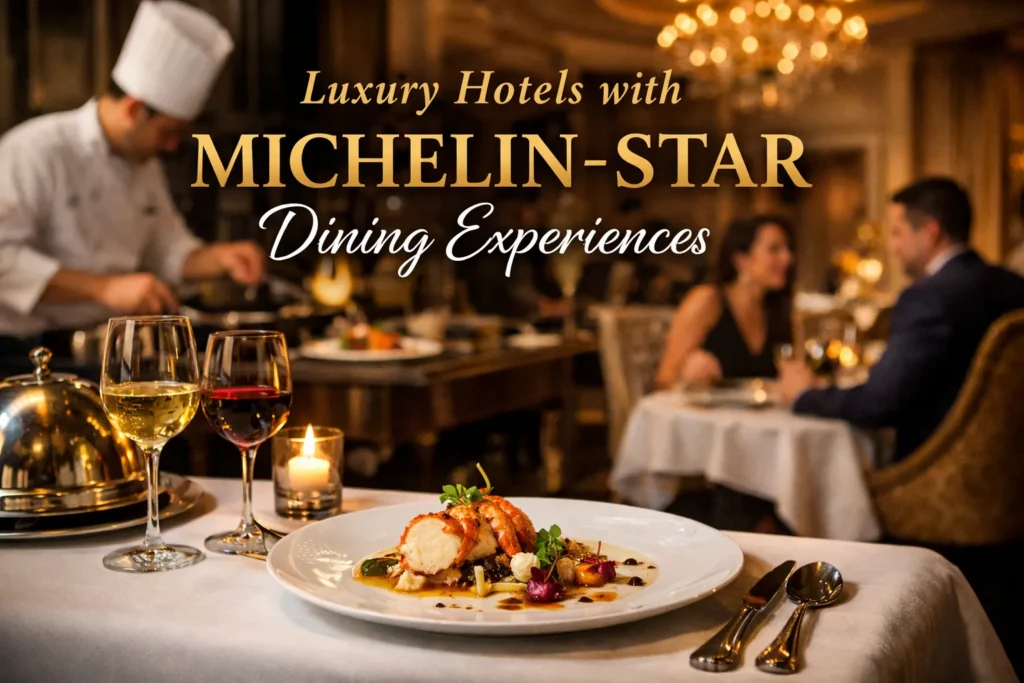
Luxury Hotels with Michelin-Star Dining Experiences
The New Standard of Luxury Travel
Luxury travel has changed. A few years ago, travelers often judged a hotel by the suite size, marble bathroom, or skyline view. That still matters, of course. But now the real signal of prestige is experience. And nothing says elevated hospitality quite like luxury hotels with Michelin-star dining experiences.
For today’s international luxury traveler, booking a premium hotel is not only about sleeping in comfort. It is about entering a carefully designed world where every detail feels intentional. The restaurant becomes part of the destination. The tasting menu becomes part of the story. The sommelier, private concierge, wellness team, and VIP host all work together like an orchestra. When that happens, the hotel stops being a place to stay and becomes a reason to travel.
This shift matters for premium travel, luxury lifestyle, and even high-value digital publishing. Why? Because affluent readers and travelers search for elite experiences with strong purchase intent. They are not browsing for cheap weekend deals. They are looking for private transfers, luxury suites, fine dining reservations, premium travel insurance, exclusive packages, and curated high-end itineraries. That audience attracts premium advertisers in travel, finance, private banking, and luxury services.
What Makes a Luxury Hotel Truly Exceptional
A truly exceptional luxury hotel is never built on design alone. Beautiful interiors may catch the eye, but they do not create loyalty by themselves. Travelers remember how a place made them feel. Did the hotel anticipate preferences before check-in? Did the concierge secure difficult restaurant reservations? Did the staff create a seamless stay from airport arrival to private departure?
That is where elite hospitality separates itself from generic five-star branding. The best properties combine architectural elegance, personalized service, privacy, culinary prestige, and emotional intelligence. In simple terms, they do not just look expensive. They feel rare.
Think of it like a custom-made watch. Anyone can buy something shiny, but only a true collector understands craftsmanship, movement, precision, and heritage. Luxury hotels work the same way. The most desirable properties offer quiet excellence: discreet VIP treatment, high thread count linens, luxury spa rituals, chauffeur service, curated art collections, and Michelin-level dining under one roof. That combination speaks directly to travelers who value time, comfort, and exclusivity more than noise.
Why Michelin-Star Dining Changes the Entire Stay
A Michelin-star restaurant inside a luxury hotel changes guest behavior in a powerful way. Instead of asking, “Where should we eat tonight?” the traveler starts asking, “Can we build the whole trip around this property?” That is a huge difference.
Dining at this level is not just about food. It is about theater, craftsmanship, memory, and identity. A tasting menu becomes an immersion into local ingredients, culinary philosophy, and service rituals. The plating is precise. The pacing is deliberate. The wine pairing feels like a conversation between regions, vintages, and mood.
For affluent guests, that creates perceived value far beyond the room rate. A luxury suite paired with Michelin-star dining feels complete. It delivers convenience, status, and emotional payoff all at once. No taxis. No uncertainty. No compromise. The traveler enjoys a seamless ecosystem where the hotel room, spa, bar, concierge lounge, and restaurant work together.
This is also why premium hotel packages built around fine dining often convert well. They speak to a traveler who prefers certainty, access, and excellence. A “stay and dine” package at a palace hotel or luxury resort can feel far more attractive than piecing together a trip manually. High-net-worth travelers pay for frictionless quality, and Michelin-star hospitality is the perfect example.
The Link Between Luxury Hospitality and Premium Lifestyle Travel
Luxury hospitality sits at the center of premium lifestyle travel. It touches more than accommodation. It intersects with wealth management behavior, premium credit card usage, luxury retail, private aviation, executive travel, destination weddings, and high-end wellness.
Affluent travelers often make decisions based on time efficiency and emotional return. They are not simply buying a room. They are investing in privacy, prestige, convenience, and unforgettable access. That is why Michelin-star dining fits naturally into the luxury lifestyle segment. It represents excellence that is both visible and deeply personal.
Picture a traveler arriving in Paris for a three-night stay. They book a suite with Eiffel Tower views, arrange airport pickup in a luxury sedan, reserve a spa treatment, and dine at a Michelin-starred restaurant within the hotel. The entire itinerary feels polished. No part of the experience is random. That polished continuity is exactly what premium travel clients want.
In digital publishing, this niche performs especially well because it overlaps with valuable advertiser categories. Readers interested in luxury hotels also tend to engage with business-class flights, premium travel cards, international insurance, private investment services, luxury retail, and wealth-focused lifestyle products. That makes the topic commercially attractive while still feeling editorially elegant.
Signature Features of Hotels with Michelin-Star Restaurants
The best luxury hotels with Michelin-star dining experiences offer much more than a famous restaurant in the lobby. They create an entire environment around culinary prestige.
Chef-Led Tasting Menus and Rare Wine Programs
At the heart of these hotels is usually a chef with a clear point of view. The menu tells a story. Sometimes it celebrates regional ingredients. Sometimes it pushes modern gastronomy. Either way, the meal feels curated rather than mass-produced.
Wine programs also matter. Premium guests notice whether a hotel has a respected sommelier, rare vintages, cellar experiences, and pairing flexibility. Fine wine is not just an add-on here. It is part of the luxury identity.
Butler Service, Chauffeur Transfers, and Private Access
The stay becomes stronger when hospitality extends beyond the table. Butler service can unpack luggage, prepare garments, and coordinate dining schedules. Chauffeur transfers reduce stress. Private entrances and priority access add another layer of exclusivity.
In-Room Luxury Add-Ons That Elevate the Culinary Stay
Small details create a big impression: welcome champagne, custom pillow menus, private bar carts, chef-prepared in-suite dining, or breakfast tailored to dietary preferences. These touches make the guest feel known rather than processed.
Wellness, Spa, and Concierge Integration
Luxury travelers increasingly want balance. After an indulgent multi-course dinner, they may book a detox spa ritual, personal training session, or wellness breakfast. Smart hotels connect these services, making the stay feel complete instead of fragmented.
Who Books These High-End Hotel Experiences
The audience for this niche is diverse, but it shares one thing: high intent. These guests know what they want, and they are willing to pay for it.
International luxury travelers often book these hotels for milestone occasions, private leisure escapes, or elite city breaks. Honeymooners choose them for romance and exclusivity. Executives book them for prestige and convenience. Wealthy families choose them because the service level makes travel smoother. Ultra-high-net-worth guests often return because they value privacy, recognition, and relationship-based hospitality.
This market is especially appealing for premium publishers and advertisers because the audience is commercially attractive. They may also be interested in premium banking, luxury real estate, international tax planning, first-class air travel, yacht charters, and family office services. In other words, the traveler searching for Michelin-star hotel dining is rarely a low-intent visitor.
Choosing the Right Luxury Culinary Hotel
Not every luxury hotel with a good restaurant delivers the same experience. Smart travelers look deeper. They assess the total package.
First, location matters. Is the hotel in a prime district, a secluded coastal setting, or a culturally rich destination? A Michelin-star dinner feels even more desirable when paired with iconic surroundings like Parisian boulevards, Tokyo skyline views, or Lake Como’s romantic waterfront.
Second, restaurant access is crucial. Some famous hotel restaurants are fully booked weeks in advance. Guests should check whether the property offers priority reservations, private dining rooms, or chef’s table experiences for in-house stays. That detail can make or break the trip.
Third, suite selection matters more than many people realize. A premium suite with a terrace, lounge area, and personalized minibar can dramatically enhance the stay. It creates space to relax before dinner and continue the evening after dessert. When paired with loyalty program perks, airport transfers, and dedicated concierge service, the experience feels seamless.
Real Examples of Luxury Hotels with Michelin-Star Dining Experiences
Let’s make this practical. Here are real-world examples of how this type of luxury travel works in context.
Paris: Palace Hospitality and Haute Cuisine
Paris remains one of the strongest examples of culinary luxury. A palace hotel with Michelin-star dining offers more than a glamorous room. It gives access to a refined rhythm of living: elegant breakfast service, couture shopping nearby, a spa retreat in the afternoon, and an extraordinary tasting menu at night.
A guest staying in a luxury suite in Paris may choose the hotel specifically because its restaurant is led by a celebrated chef. In that case, dinner is not an extra perk. It is the core experience. The hotel becomes both residence and cultural stage.
Tokyo: Precision, Omakase, and Modern Elegance
Tokyo brings a different type of luxury. Here, precision is everything. Service is subtle, disciplined, and deeply respectful. A luxury hotel with Michelin-star dining in Tokyo often pairs minimalist design with exceptional culinary craftsmanship.
The experience may include omakase, seasonal tasting menus, rare sake pairings, and view-driven dining spaces overlooking the city. For global travelers, Tokyo represents a masterclass in detail. Nothing feels wasted. Everything feels intentional.
Lake Como and Italy: Romance, Scenery, and Fine Gastronomy (Luxury Hotels with Michelin-Star)
In Italy, especially destinations like Lake Como, the emotional appeal becomes even stronger. The scenery already feels cinematic. Add a Michelin-star restaurant, private boat transfer, luxury spa, and elegant lakefront suite, and the trip becomes unforgettable.
This is a strong example for honeymoon travel or anniversary bookings. The hotel is not only selling comfort. It is selling atmosphere, memory, and emotional luxury.
Singapore: Urban Luxury with World-Class Tasting Menus (Luxury Hotels with Michelin-Star)
Singapore is another standout for international luxury travel. It combines efficiency, modern design, premium shopping, and world-class dining. Luxury hotels here often attract business travelers and high-spending leisure guests who want polished service and easy access to high-end experiences.
A Michelin-star dining experience in a top Singapore hotel can pair perfectly with executive suites, airport lounge transfers, rooftop cocktails, luxury retail districts, and corporate hospitality. It is urban luxury at full power.
Premium Facilities That Matter Most
When luxury travelers evaluate a hotel, facilities shape the final decision just as much as the restaurant. Michelin-star dining may attract the booking, but premium amenities often justify the rate.
Private spas are a major differentiator. Guests appreciate access to signature wellness treatments, hydrotherapy circuits, recovery therapies, and discreet treatment suites. Luxury pools, sea-view cabanas, and meditation lounges further elevate the stay.
Transportation also matters. Chauffeur-driven airport transfers, helicopter access, yacht charters, and luxury car arrangements turn logistics into part of the experience. Then there are lifestyle amenities: personal shoppers, secure valet parking, jewelry-safe storage, multilingual concierge teams, and private meeting spaces for executive guests.
The best hotels understand something simple but powerful: affluent guests do not want to solve problems during a luxury stay. They want the property to remove them before they even appear.
VIP Service as a Competitive Edge (Luxury Hotels with Michelin-Star)
VIP service is easy to mention and hard to deliver. Many hotels use the phrase, but only a few make it feel genuine.
Real VIP service is discreet. Staff remember names without overperforming. Preferences are noted without feeling intrusive. Timing is polished. Communication is calm. Nothing feels transactional.
For example, a returning guest might find their preferred tea selection already prepared in the suite. A special anniversary dinner may include a custom off-menu course. A guest with privacy concerns may be checked in privately and escorted through a low-profile entrance. These details matter because luxury is often about being understood without having to explain yourself twice.
This is where premium hotels build loyalty. The Michelin-star restaurant may create the first booking, but emotionally intelligent service often creates the second, third, and fourth.
Exclusive Experiences Beyond the Restaurant (Luxury Hotels with Michelin-Star)
Luxury culinary hotels thrive when they extend the experience beyond a standard dinner reservation. The smartest properties create moments that feel difficult to replicate elsewhere.
That may include chef’s table seating inside the kitchen, early access to seasonal menus, private vineyard excursions, cellar tastings, pastry masterclasses, or invitation-only culinary weekends. Some hotels build entire itineraries around gastronomy, pairing fine dining with regional tours, artisan visits, or bespoke shopping experiences.
These extensions matter because luxury travelers increasingly want layered experiences. They are not impressed by surface-level glamour alone. They want access, narrative, and a sense of insider privilege. When a hotel provides that, it shifts from service provider to curator.
Common Mistakes Travel Brands Should Avoid (Luxury Hotels with Michelin-Star)
Many travel writers make the mistake of using the word “luxury” too often without proving it. That weakens trust. Readers want substance. They want to know what makes the stay exceptional. Is it the chef? The suite? The view? The service? The private access? The rare wine pairing? Be specific.
Another mistake is attracting low-intent traffic with broad or budget-focused keywords. If the goal is premium positioning, the language must reflect premium demand. Terms like exclusive travel experience, five-star culinary hotel, Michelin dining resort, private luxury getaway, bespoke hospitality, and VIP suite service signal a much stronger audience than generic bargain travel phrasing.
The final mistake is forgetting context. Readers do not just want inspiration. They want usable guidance inside the story. They want to understand which details matter when choosing a hotel, what elevates the dining experience, and how premium service changes the stay in real terms.
The Future of Michelin-Star Hotel Travel (Luxury Hotels with Michelin-Star)
This niche is only getting stronger. Luxury travelers are becoming more selective, not less. They are looking for privacy, quality, and emotional meaning. Michelin-star hotel dining sits perfectly inside that trend.
We are also seeing stronger overlap between fine dining and wellness. Travelers want indulgence, but they also want balance. That means hotels are investing in nutrition-forward menus, alcohol-free pairing programs, regenerative spa concepts, and longer-stay luxury wellness packages.
Personalization will also become even more important. Private dining suites, members-only culinary experiences, invitation-based events, and ultra-tailored itineraries will define the next era of premium hospitality. In other words, the future is not louder luxury. It is smarter luxury.
Conclusion (Luxury Hotels with Michelin-Star)
Luxury hotels with Michelin-star dining experiences represent the highest form of modern hospitality because they combine comfort, cuisine, privacy, and prestige into one seamless journey. For international luxury travelers, this is no longer a niche preference. It is the gold standard. The right hotel does not simply offer a beautiful room and an excellent meal. It creates a total world of VIP service, curated indulgence, and unforgettable emotional value. For travel brands, publishers, and luxury marketers, this niche also holds exceptional SEO and monetization potential because it speaks directly to affluent intent, premium lifestyle behavior, and high-value advertiser demand. In the end, the winning formula is simple: refined hospitality, world-class dining, exclusive access, and storytelling that feels as polished as the experience itself.